Financing Business During Wartime: RaiffeisenBank Secures International Guarantees Supporting €1.64 Billion in Lending to Ukrainian Businesses
During wartime, Ukrainian businesses’ access to capital depends on more than the cost of borrowing. Equally important is how risks are shared among entrepreneurs, banks, insurers and international partners - particularly when it comes to restoring damaged assets, modernising production or making investments that will take several years to pay off.
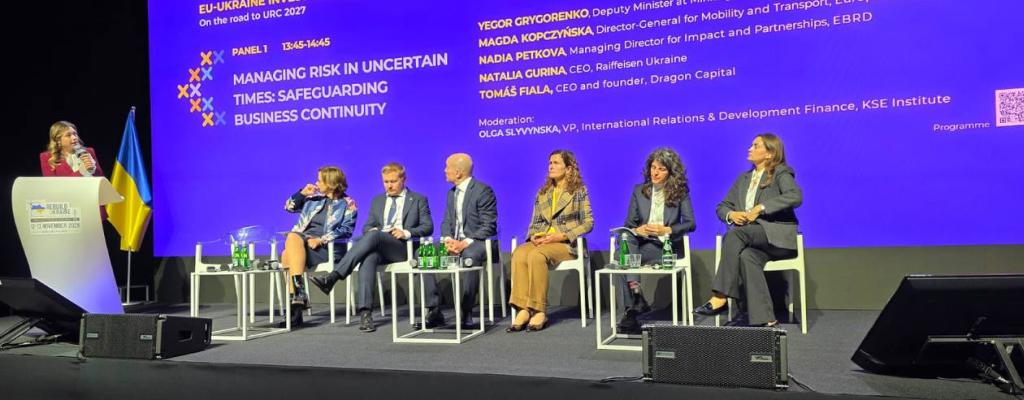
These issues were discussed at the Third EU-Ukraine Investment Conference in Warsaw. Nataliia Hurina,Chair of the Management Board of Raiffeisen Bank, joined representatives of Ukraine, the EU and international financial institutions for a panel discussion on risk management and business continuity. The discussion focused on credit guarantees, war risk insurance and mechanisms that can make investment inUkraine’s economy more accessible.
Between 2022 and 2026, Raiffeisen Bank entered into agreements with international partners covering a loan portfolio of up to €1.64 billion. Of this amount, €830 million has already been used to finance more than 3,500 clients. Partners include the EBRD, EIB, European Investment Fund, IFC, DFC and MIGA.
These mechanisms enable the bank to finance businesses with growth potential that may not meet conventional lending requirements because of lost property, damaged assets or relocation. In a number of programmes, international guarantees also allow collateral requirements to be eased. Another area of focus is support for sustainable investment: the bank has already paid more than €4.5 million in incentive payments to clients implementing green projects.
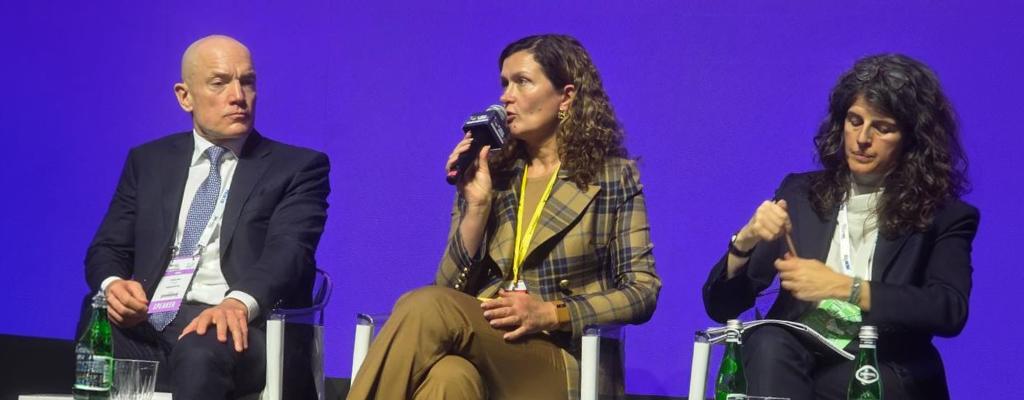
“We measure the effectiveness of wartime financing primarily by the opportunities it creates for businesses. A company cannot plan a five-year investment when it can only access financing for two years.Nor can it invest in recovery without knowing how its assets will be protected and its financial obligations addressed in the event of further war-related losses. That is why our role is to develop comprehensive financial solutions that combine lending, international guarantees, insurance and, where needed, equity investment. When risks are shared among all parties, businesses can make long-term investment decisions even in wartime,” said Nataliia Hurina, Chair of the Management Board of Raiffeisen Bank.
One practical tool supporting this approach is the Enterprise Security Enhancement pilot programme, whichRaiffeisen Bank is implementing jointly with the EBRD. It provides €1.2 million in donor funding for partial repayment of investment loan debt where financed assets have sustained verified direct war-related damage and no other sources of compensation are available.
At the same time, scaling up business investment requires longer loan tenors, more accessible insurance and clear terms for renewing insurance coverage. Financing urgent repairs before compensation is received is equally important. For certain reconstruction projects, bringing in an equity investor may offer an alternative to taking on additional debt. In this model, the bank’s role is to bring together the resources of international financial institutions, donors, insurers and investors to address the specific needs of each business.